Description
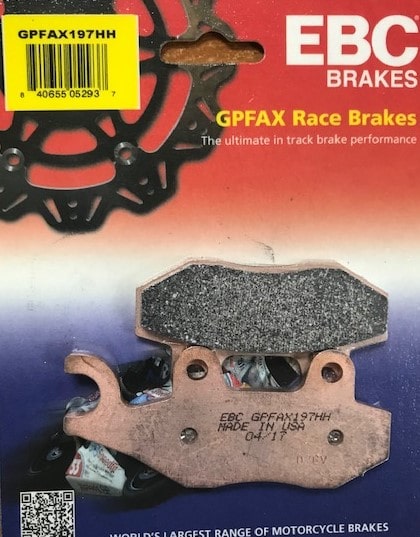
EBC GPFAX197HH
The GPFAX197HH Sintered Race Brake Pads are designed exclusively for RACE ONLY use. This advanced blend offers superior friction and grip compared to any other brake product available on the market.
With the highest known friction coefficient measuring between 0.6 and 0.7, these pads deliver an unparalleled braking performance.
However, due to this extreme grip, they are completely unsuitable for street use or standard road tires. Zero brake fade is guaranteed, thanks to their exceptional heat stability. This provides racers with unwavering confidence and a durable product that maintains performance across multiple races.
Important Safety Note: GPFAX Sintered Race brake pads are intended for closed-circuit use only. Street or highway riding with this material is highly inadvisable and dangerous. Their high friction levels are optimized for ideal track conditions with race tires or slicks on prepared asphalt surfaces—not for highway tires or public roads. These pads are not ECE R90 approved nor TÜV tested with a German ABE, making their use on highways illegal in many countries.
Features and Benefits
- Made in the EBC plant in Ohio, USA
- Ultra-high friction fade-resistant compound for maximum stopping power
- Superb heat cycling ability, ensuring consistent performance race after race
- Built on hard steel SN series backplate steels to resist warping and brinelling under heavy loads
- Not R90 street legal or TÜV tested (a requirement for European markets only)
After 35 years as the worlds number one brand, EBC Brakes has accumulated massive experience on how to guide its customers to enjoy their brake products safely.
Bedding in new motorcycle pads and rotors is an extremely important process – please follow these guidelines:
Fitting New Disc Pads To Used Brake Discs/Rotors
First of all, there are two different types of brake pad on the world markets which are sintered copper alloy or organic types. The sintered types are of course much harder and take 3-5 times longer to bed in GEOMETRICALLY to any hollow areas or ridges on a worn brake rotor. Organic pads being slightly softer bed in more quickly but also suffer from what is known as “green fade”. Green fade is explained as a heat curing of the brake material which happens over the first heavy heat cycles.
To bed in sintered pads, drive the vehicle carefully allowing extra braking distance for the first 300 miles. Please be aware that brake performance during the bed in period may be significantly less than you have been accustomed to. What you are looking for is to see a 90%+ surface area contact between the pad and the disc or rotor before optimum braking will be achieved.
Once your pads are 90% surface area bedded after the 300-400 miles, on a safe road, use the brakes 10 times in succession stopping your motorcycle from 60mph to 20mph to get the brakes deliberately hot. This is particularly important with the organic versions (aramid fibre types, carbon based pad types and semi-metallic pad types). After this process, the pads should settle down and normal riding and brake performance can be safely achieved.
Fitting New Disc Pads With New Brake Discs/Rotors
Although the brake disc/rotor surface will be perfectly flat when using a new rotor, it is still extremely important to “condition” the brake discs and match them up to your pads by driving gently for 200-300 miles. After this period, perform the heat bedding of organic pads as above in blue text.
Always remember not to contaminate your brake pads with any fluids or greases (even brake fluid) during the install process.
If you experience any vibration or serious loss of brake during this process, contact a professional motorcycle dealer for assistance.
Bedding In New Brakes for Trackday or Race Use
If you are using your motorcycle for a trackday or race event, bedding in the new pads is even more important. 99% of racers use sintered pads for trackday and race events because they do not require chemical bedding as in blue above, but these pads still need to be matched to the rotor and therefore a bedding in process of 2-3 laps gentle brake use gradually increasing brake pressure and load after that has been completed is advisable.





Reviews
There are no reviews yet.